
Solutions Advisory

Trucking and Dispatch Operations

Financial and operating controls for trucking teams.

How can an advisor improve financial visibility for a trucking business?

An advisor helps trucking leaders connect dispatch plans, loaded and empty movement, driver and equipment availability, fuel and maintenance costs, delivery exceptions, and invoice documentation. A shared operating review can show which records support each measure and where follow-up is delayed. Define cost and utilization consistently before comparing periods.

Specific measures, data definitions, and priorities should be agreed with leadership and based on current business records.

Review load economics, dispatch, driver and equipment capacity, empty miles, maintenance, customer terms, invoicing, and cash together.

A management view for Trucking and dispatch businesses

Connect daily work to business decisions

An advisor helps trucking leaders connect dispatch plans, loaded and empty movement, driver and equipment availability, fuel and maintenance costs, delivery exceptions, and invoice documentation. A shared operating review can show which records support each measure and where follow-up is delayed. Define cost and utilization consistently before comparing periods.

Questions to bring into the review

  • load and lane mix with consistent mile definitions
  • driver and equipment availability
  • delivery, dwell, and exception follow-up
  • documentation, invoice readiness, and cash timing

HPG’s advisory work is tailored to business records and leadership priorities. It does not replace licensed professional or clinical judgment where applicable.

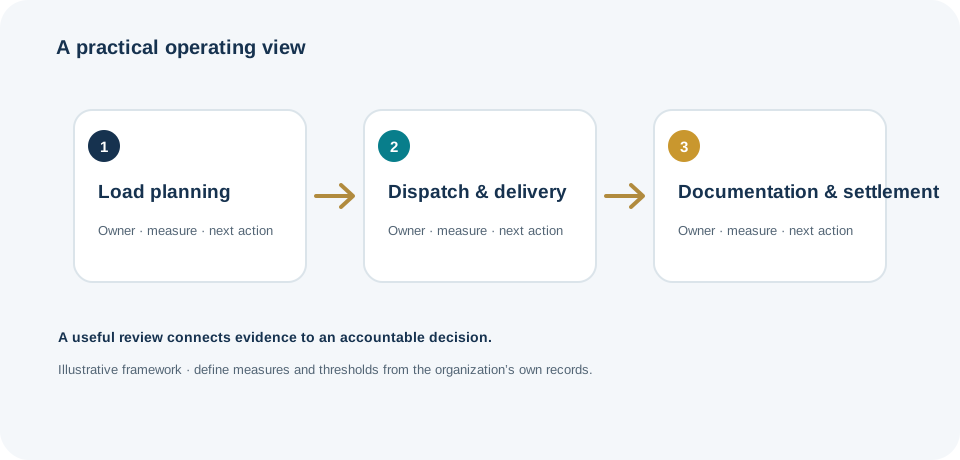
Illustrative Trucking and dispatch businesses operating map: Load planning; Dispatch & delivery; Documentation & settlement.
Illustrative planning framework. Define measures and thresholds from the organization’s own records.

A practical starting set of measures

These are definitions to align with your team, not industry benchmarks or promised outcomes.

Loaded-mile share

Loaded miles ÷ total miles for the selected fleet and period; define deadhead treatment.

Cost per mile

Selected operating costs ÷ total miles, with the included cost categories stated.

On-time delivery

Deliveries meeting the company’s stated appointment window ÷ deliveries with a recorded window.

For each measure, record the formula, source system, time period, owner, and decision it supports. Keep definitions consistent before comparing results.

What to bring into view

Review load economics, dispatch, driver and equipment capacity, empty miles, maintenance, customer terms, invoicing, and cash together.

  • load profitability and rate assumptions
  • dispatch, utilization, and empty-mile visibility
  • equipment readiness and receivables

Related guidance: 13 Week Cash Flow Forecast and Weekly Business Scorecard.

Common Questions

What should a trucking company review by load or route?

Compare revenue and direct costs by load or route, loaded and empty miles, on-time performance, equipment utilization, maintenance, customer terms, receivables, and cash needs. Use the results to guide pricing and capacity decisions.

How can HPG help a trucking or dispatch operation?

HPG helps leadership connect load economics, dispatch, driver and equipment capacity, customer terms, invoicing, and cash planning. Engagements focus on visibility, operating ownership, and a review rhythm that fits the business.

What should a trucking business check before adding equipment?

Assess committed demand, expected utilization, driver availability, maintenance capacity, financing and working-capital needs, customer concentration, and dispatch coverage. Document assumptions and review actual performance against them.

Make the next operating decision clearer

Share the business question you are working through. HPG will review your inquiry and follow up about a practical next step.